


EMT Review Plus
4.0132.00 Reviews
App Specs
- Version
- 4.2.0
- Updated On
- License
- $13.99
- Downloads
- 10,000+
- Developer
- Limmer Education, LLC
- Categories
- Medical
- Platform
- Android, iOS
Screenshots
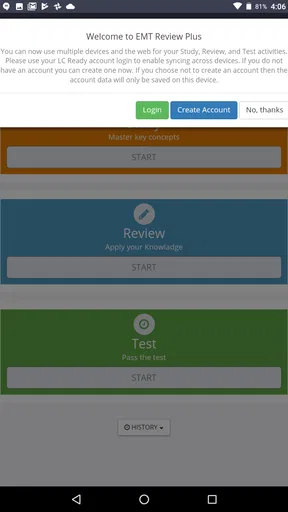
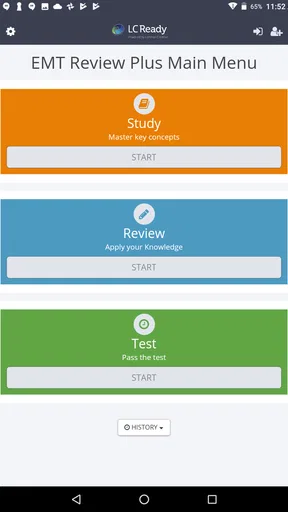
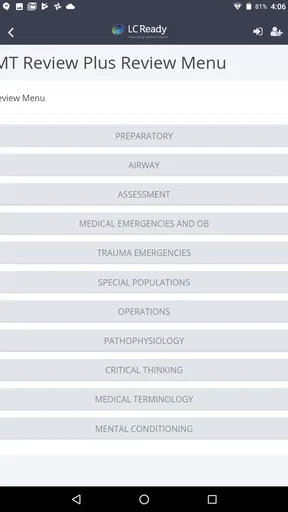
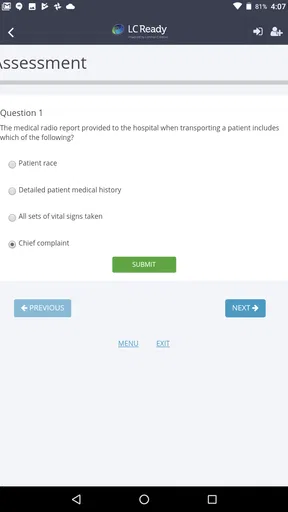
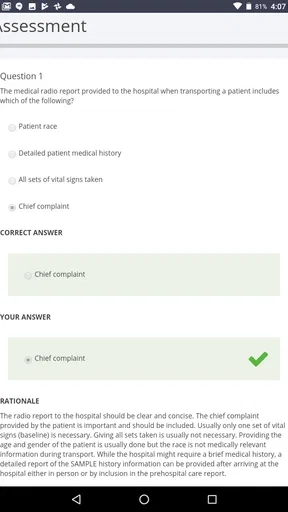
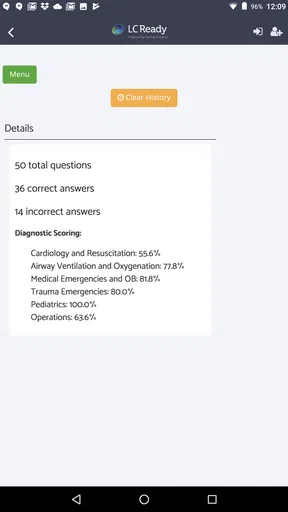
 Analysis by AppCompare
Preparing for the NREMT can feel less like ordinary studying and more like learning to make safe decisions while the clock is moving. That is where EMT Review Plus fits into my routine. It is a medical study app from Limmer Education, LLC, built around practice rather than long textbook chapters. I found it most useful when I already understood the basic material and needed a focused way to test recall, identify weak areas, and become more comfortable with exam-style questions.
The app is not trying to replace an EMT course, an instructor, or hands-on training. Its value is narrower and more practical: it gives me a substantial bank of review questions and five exams that I can use repeatedly. The store summary describes more than 1,200 review questions, which is enough variety to support a serious revision plan rather than a single quick quiz session. My overall impression is positive, but the app works best when I use it deliberately instead of simply tapping through questions until I recognize familiar answers.
How I built a useful baseline study workflow
My first recommendation is to treat the app as a training tool, not as a passive reference book. I begin with a short session when I have a clear goal: reviewing assessment priorities, checking how I handle treatment decisions, or testing myself after studying a particular topic elsewhere. That small decision changes the experience. Without a goal, a large question bank can become a stream of disconnected prompts. With one, every incorrect answer gives me something specific to revisit.
A realistic everyday use case is a student who has twenty minutes between class and work. Instead of opening a full chapter and stopping halfway through, that student can complete a compact practice session, note the questions that caused hesitation, and return to the relevant lesson later. I like this approach because it separates recognizing an explanation from actually producing the correct answer. Those are different skills, and exam preparation needs both.
I would not begin by taking one of the full exams immediately. A better starting point is to use the review questions to discover where the gaps are. If I miss several questions involving the same kind of judgment, I pause and study that subject before attempting another broad session. This prevents a common mistake: measuring endurance before building accuracy. The full exams become more valuable after I have already worked through the material and want to see whether I can maintain good decisions across a longer run.
The app’s question volume also makes repetition more useful than a single pass. On the first attempt, I am often learning the wording and the decision pattern. On a later attempt, I can ask whether I truly understand why an answer is best, or whether I simply remember seeing it before. I recommend explaining the reasoning out loud before checking the result. That extra step exposes shallow recognition, especially when two options appear medically plausible.
One habit that improved my sessions was keeping a very small error log outside the app. I write down the subject, the mistake I made, and the rule or priority that should have guided me. I do not copy every question. I record patterns: rushing past the initial assessment, confusing an immediate intervention with a later one, or choosing a technically possible action that is not the priority in the scenario. This turns the app into a feedback loop instead of a collection of isolated scores.
Worth Reading Before You Choose

Flipboard Shows What News Apps Must Do Beyond the Feed

Switching to Android Auto Means Rethinking Your Driving Routine

Google Calendar Makes a Crowded Week Easier to Manage

Ludo King Makes the Most of the Minutes Between Plans

Baby Panda World Brings Quick Play to Modern Phones, but Its Game Library Feels Busy

ESPN’s Live Game View Makes Following Close Games Easier
What I check before relying on it every day
Because this is a study app rather than a complete course, I first make sure my basic learning materials are close by. When an answer exposes a knowledge gap, I want to investigate it in my class notes, textbook, or instructor guidance. A practice question can show me that I am wrong, but it should not become my only source for understanding a complicated clinical topic. That distinction matters for anyone who is new to EMT education.
I also check the device requirement before planning a long study routine. The current version is 4.2.0 and requires iOS 12 or later. For someone using an older device, compatibility should be settled before paying for the app or building a revision schedule around it. On a supported device, the experience is straightforward, but this is still a practical consideration for students who keep an older phone or tablet for school.
The price is $13.99, so I see it as a focused study purchase rather than a casual free quiz app. That cost makes more sense if I expect to return to the question bank over several weeks and use the exams as checkpoints. It makes less sense if I only want a few sample questions or if I already have a complete practice platform included with a course. I would compare the price with the amount of structured practice I will actually use, not with the size of the question count alone.
The app is rated for Everyone, which makes it easy to share the device with a broad range of learners from a content-rating perspective. That does not mean every learner will find the material equally suitable. EMT preparation involves medical decisions and professional responsibility, so beginners still need instruction and supervision. The age label is useful for store browsing, but it should not be confused with a recommendation to study clinical care without qualified teaching.
I also pay attention to how I handle explanations and review screens. The most productive setting, in my experience, is the one that encourages me to commit to an answer before looking at feedback. If I am allowed to change my choice repeatedly without reflecting, the session becomes less diagnostic. I want each question to answer two things: whether I selected the correct option and whether I understood the reason well enough to reproduce it later.
Faster patterns that make the question bank more useful
Experienced users can get more from the app by using repeatable patterns. My favorite is the three-pass method. On the first pass, I answer normally and mark mentally which questions felt uncertain. On the second, I revisit the uncertain items and explain the decision in plain language. On the third, I return after a delay and try to solve them without relying on the wording I remember. This is more demanding than chasing a perfect immediate score, but it gives me a better picture of durable knowledge.
Another useful pattern is to separate speed practice from reasoning practice. During a reasoning session, I slow down and examine every option, including why the attractive wrong answers fail. During a speed session, I answer under tighter time pressure and avoid overthinking familiar fundamentals. Mixing both modes in every session can make it difficult to know whether a poor result came from missing knowledge or from slow decision-making. Keeping the purpose clear makes the result easier to act on.
I also avoid treating all wrong answers as equal. A careless reading error needs a different response from a misunderstanding of airway management or patient assessment. After a session, I sort mistakes into three simple groups: knowledge gap, priority error, and question-reading error. This is one of the less obvious ways to use a review app effectively. The same percentage score can hide very different problems, and each problem needs a different remedy.
For broad preparation, I use the review questions in shorter blocks and reserve the five exams for milestone checks. Taking a full exam too frequently can turn it into a memory exercise, especially if I recognize the structure or remember previous choices. I prefer to leave enough time between those larger attempts to study the errors they reveal. That makes each exam a genuine checkpoint rather than another repetition of the same performance.
A further improvement is to study with a partner without turning the session into a guessing contest. One person can read a scenario while the other explains the priority and the reason for rejecting the alternatives. Then they switch roles. This works particularly well when both people are willing to challenge the reasoning respectfully. The app supplies the prompts, but the conversation reveals whether an answer is understood or merely familiar.
I would also use the app at different times of day for different purposes. A short morning session can test recall before new information arrives. An evening session can focus on reviewing mistakes from class. A longer weekend block can support an exam-style attempt. This schedule is more sustainable than trying to complete a large number of questions in one sitting, and it reduces the temptation to judge progress by raw volume.
Where the app is strong and where its limits matter
The clearest strength is concentration. Instead of searching through general medical websites or sorting through unrelated quiz material, I can open a resource aimed specifically at EMT review. The combination of a large review bank and five exams gives the app a useful range: short practice for daily work and longer assessments for readiness checks. That focused design is why I would recommend it to an EMT student who already has core instruction and wants more structured repetition.
Its limitation is the same thing that makes it focused. It is not a substitute for demonstrations, practical skills, instructor feedback, or the experience of managing a patient in a changing environment. Multiple-choice practice can improve recognition and prioritization, but it cannot reproduce communication, physical assessment, teamwork, or the pressure of real care. Anyone looking for a complete EMT learning environment should choose a course or platform that includes those elements.
I also would not rely on it as my only source for current guidance. Exam preparation benefits from consistency, but medical education must be connected to the curriculum and guidance being taught by the learner’s program. When a question raises uncertainty, I verify the concept with my instructor or primary study materials rather than assuming that one practice item explains every exception. That is not a criticism of this app alone; it is a sensible boundary for any question-based medical resource.
Compared with paper flashcards, the app is more convenient for varied practice and longer assessment sessions. Paper cards can be excellent for memorizing terms, but they often make it easy to recognize an isolated fact without practicing a decision. Compared with a general quiz app, this one is more relevant to an EMT learner because the review is organized around the certification goal. Compared with a full online course, it is lighter and more portable, but it lacks the broader teaching structure that a beginner may need.
The rating provides a useful signal that the app has found an audience, with a 4.0 average from around 230 ratings and roughly 132 written reviews. I would interpret that as encouraging but not definitive. Ratings cannot tell me whether the app matches my curriculum, how I will respond to its question style, or whether I will use it consistently. My decision would depend more on having a clear study plan than on expecting the app to create motivation by itself.
The app has passed 10K+ installs, which suggests that it is established enough to be familiar within its niche without making it a universal study solution. I see that as a reason to consider it, not a reason to assume it is automatically the best option. EMT learners have different needs: some want targeted practice, some need teaching from the beginning, and others need realistic skills evaluation. The right choice depends on which of those problems they are actually trying to solve.
Who should use it, and who should choose something else
I think it is a good fit for a current EMT student, a learner returning to review after a break, or someone who wants a structured way to expose weak areas before the NREMT. It is especially useful for people who can study independently and are willing to review mistakes rather than simply chase higher scores. The app also suits a busy schedule because practice questions can be fitted around classes, commuting, or short gaps in the day.
I would be more cautious about recommending it to someone at the very beginning of EMT education. If medical terminology, assessment order, and basic treatment principles are still unfamiliar, question practice can feel confusing instead of helpful. In that situation, an instructor-led course, textbook, or teaching platform should come first, with this app added later for reinforcement. Likewise, a learner who needs video demonstrations or skills-lab preparation should choose a resource that explicitly provides those experiences.
It may also be the wrong choice for someone who dislikes independent review or needs detailed explanations for every concept before moving on. A question bank rewards active follow-up. If I am not prepared to investigate errors and connect them to my main coursework, the app becomes a score generator rather than a learning tool. That is a user limitation as much as an app limitation, but it is important to recognize before spending the money.
My verdict after making it part of a study routine
EMT Review Plus is a focused medical review app with a clear purpose: repeated exam-style practice for EMT learners. I appreciate that it offers enough questions for an ongoing routine and includes five exams for broader checkpoints. The current version is 4.2.0, and the app comes from Limmer Education, LLC, a developer associated here with a long-running EMT review product released on January 5, 2011. Those details give it useful continuity, but the real value still comes from how thoughtfully I use the material.
At $13.99, I would recommend it to someone who already has core instruction and wants a dedicated practice companion. I would not present it as a complete replacement for an EMT course, clinical guidance, or hands-on preparation. Its best role is between lessons: test yourself, classify the mistake, revisit the underlying concept, and return later under slightly more demanding conditions.
My final advice is to start with targeted review, protect the full exams from overuse, and keep a simple record of recurring errors. If you follow that workflow, the app can turn spare minutes into meaningful preparation instead of empty quiz repetition. Use it to sharpen decisions, not to replace learning the reasoning behind them. For the right learner, that makes it a practical and worthwhile addition to an NREMT study plan.
Pros
- Provides quick access to EMT practice questions and review materials.
- Useful for reinforcing key concepts during short study sessions.
- Mobile format makes studying convenient while commuting or traveling.
- Can help identify weak areas through repeated practice.
- Suitable for learners preparing for EMT-related exams on the go.
Cons
- Content quality may vary depending on the selected review section.
- Some features or materials may require an in-app purchase.
- A stable internet connection may be needed for certain resources.
- Practice questions may not fully replace official course instruction.
- The interface may feel basic compared with larger study platforms.
FAQs for EMT Review Plus
What is EMT Review Plus, and who is it designed for?
EMT Review Plus is an educational study app designed to help emergency medical technician students and professionals review essential concepts before exams or certification renewals. It typically focuses on topics such as patient assessment, trauma, medical emergencies, airway management, operations, and emergency procedures. It is best used as a supplementary review tool rather than a replacement for accredited training, hands-on practice, official textbooks, or instructor guidance.
What type of study material and practice does EMT Review Plus include?
The app is centered on review-based learning, usually combining topic-organized questions, answer explanations, and practice sessions that help users identify weak areas. Depending on the version and platform, it may also provide progress tracking, timed quizzes, flashcard-style review, or exam simulations. Before downloading, users should check the current feature list because content, question counts, and available study modes can vary between updates.
Can EMT Review Plus be used to prepare for the NREMT exam?
EMT Review Plus can be useful for reviewing subjects commonly covered on EMT certification examinations, including patient care, assessment, safety, and emergency management. However, practice questions should not be treated as an exact representation of the current NREMT exam. Requirements and testing standards may change, so candidates should confirm the latest official blueprint and combine the app with approved coursework, practical training, and current NREMT resources.
Does EMT Review Plus work without an internet connection?
Offline availability depends on the app version, device, and the specific content being accessed. Some review questions or previously downloaded materials may remain available without a connection, while features such as account synchronization, advertisements, purchases, updates, or progress backups may require internet access. Users who plan to study while traveling should open the app online first and verify which sections are accessible offline.
Is EMT Review Plus free to download, and are there in-app purchases?
The download may be free, but some features or complete question banks can require in-app purchases, a subscription, or an upgrade. Pricing and access conditions may differ between Android and iOS and can change over time. Before installing, review the store listing for subscription details, trial terms, advertisements, refund policies, and supported devices so you understand the total cost before beginning your study plan.


